STAYING AT EIHEIJI TEMPLE: HAKUJUKAN AND ZEN RETREAT GUIDE
Eiheiji was one of those places I added to my Japan itinerary because I wanted to experience the zazen culture in Japan and also see something else than the major cities like Kyoto–Tokyo–Kanazawa. It ended up being one of the most special experiences of my trip.
Hidden in the mountains of Fukui Prefecture, Eiheiji is not just a beautiful temple you visit for an hour and leave. It is one of the two head temples of Soto Zen Buddhism in Japan, founded by Zen Master Dōgen in 1244, and it is still an active training monastery today. You can feel that immediately: the cedar trees, the wooden corridors, the silence, the rhythm of the monks’ daily life. Everything invites you to slow down.
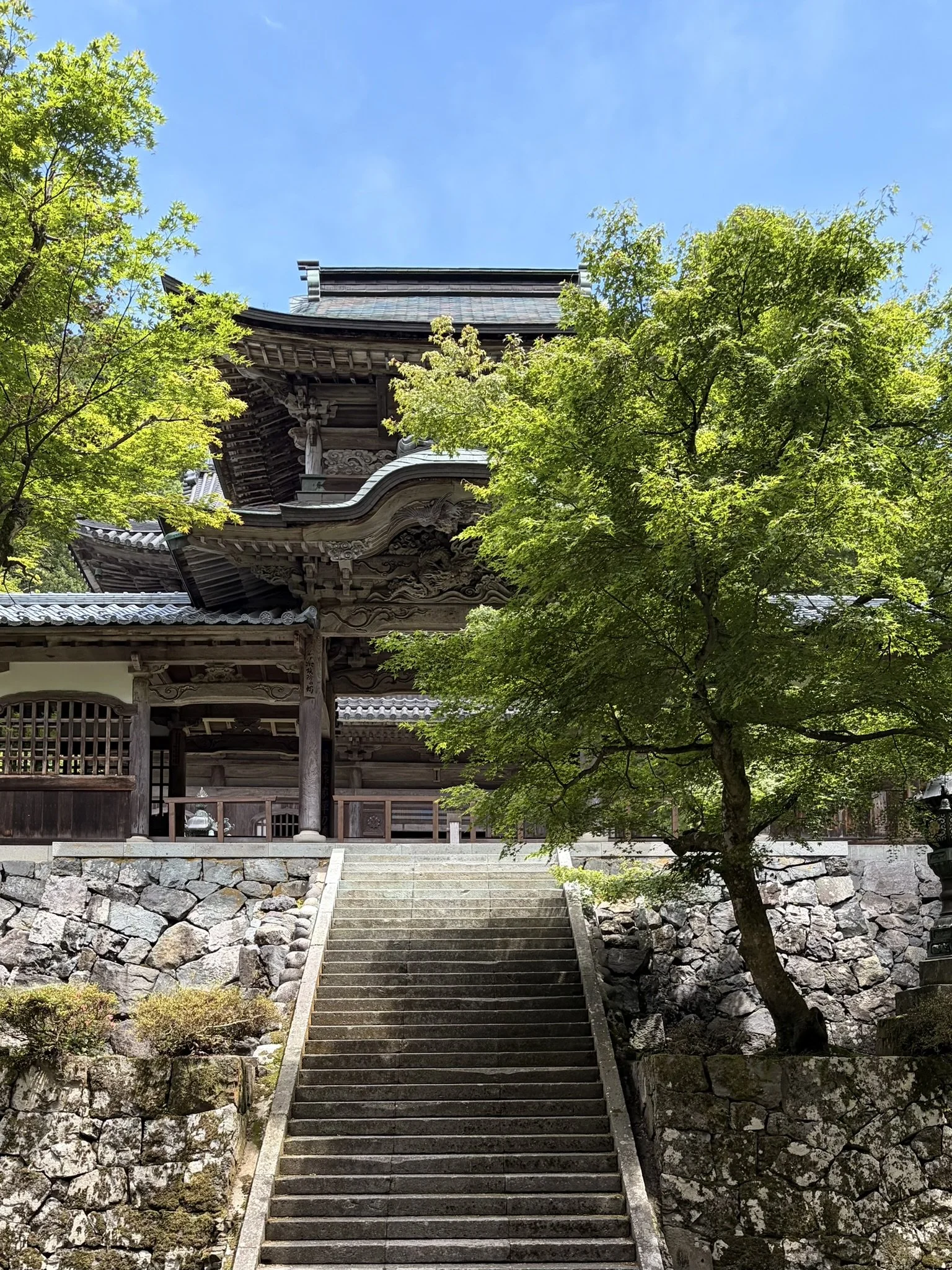
Eiheiji temple
How I got to Eiheiji
I placed Eiheiji in my trip between Kyoto and Kanazawa, which worked really well.
From Kyoto, I took the train to Tsuruga, then the Shinkansen from Tsuruga to Fukui, and from Fukui Station I took a local bus that goes straight to Eiheiji. There is a direct bus from Fukui Station to the temple gate area, and the journey takes about 30 minutes.
A small but important tip: there is delicious sushi inside Fukui Station, which is ideal if you need to wait for the bus.
I booked everything through Omio, and I highly recommend doing that because the train tickets can get confusing, especially when you have to combine limited express trains and Shinkansen tickets. Japan’s transport is amazing, but sometimes “amazing” also means “you need three tickets and a small prayer.”
After Eiheiji, I headed to Kanazawa, only 30 minutes away from Fukui with the Shinkansen. I also booked it on Omio to be sure to have seats as this train continues all the way to Tokyo afterwards.
Where I stayed: Hakujukan
Once in Eiheiji, I stayed at Hakujukan, which I believe is one of the only places to stay right by the temple. It is definitely on the more luxurious side, and you feel it as soon as you arrive.
The staff were incredibly patient and explained everything clearly, which is very helpful because the whole experience is organized around the temple schedule. Hakujukan is modern, calm, and very polished, but still deeply connected to the Zen atmosphere of Eiheiji. The Ryokan is located just outside the temple gate, and its Zen concierge can help arrange experiences such as zazen, sutra copying, lectures, and attendance at morning activities.
The room was amazing: very spacious, with a tatami area, a teapot for making tea, and that clean, minimalist Japanese design that makes you suddenly want to own only three objects and fold your socks properly. The hotel also feels brand new and very modern.
There is also a beautiful onsen, again very new, with both indoor and outdoor baths. After zazen, walking around the temple, and trying to be spiritually elevated, sinking into a hot bath was exactly what my very earthly body needed.
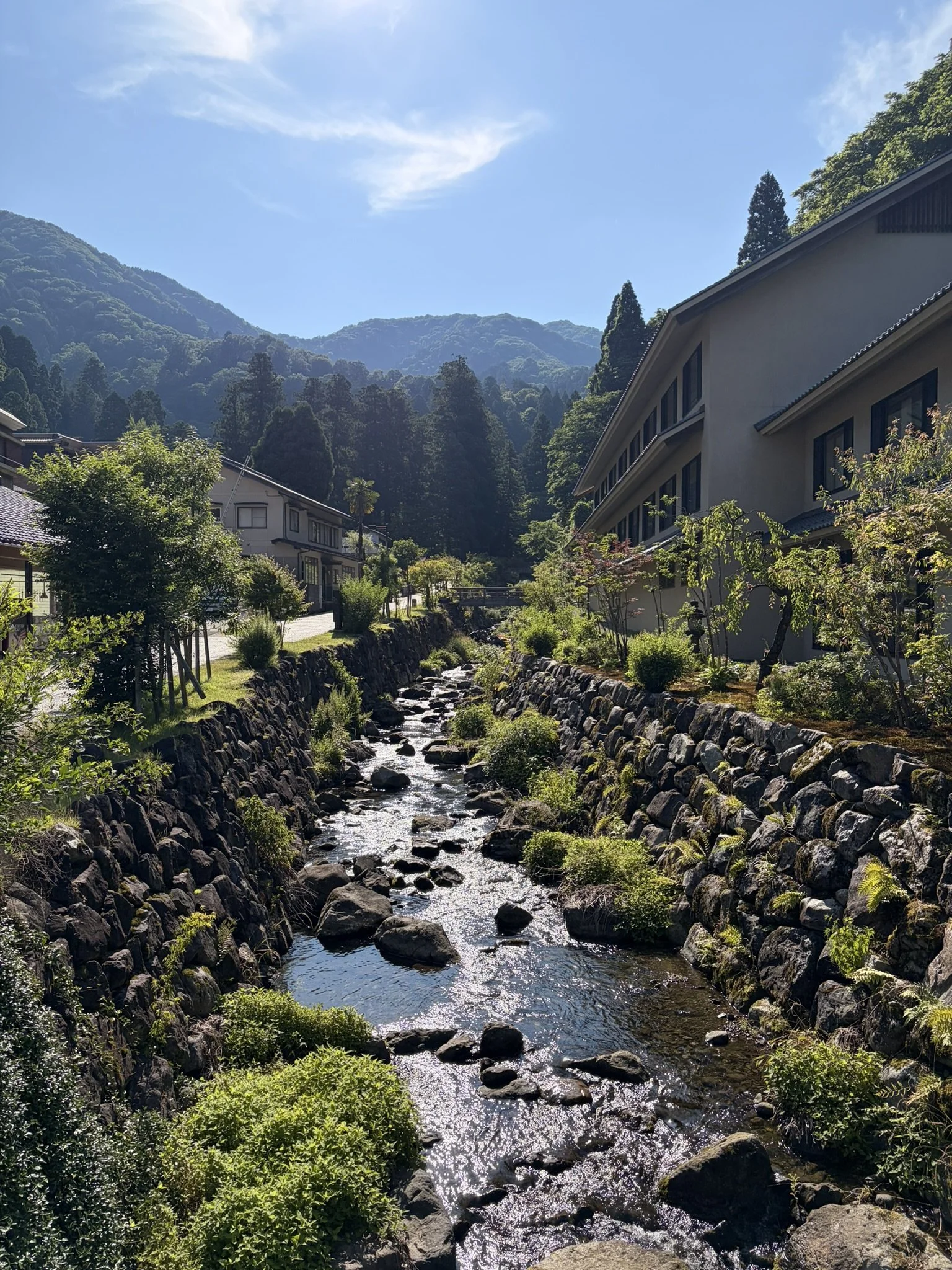
River view in front of Hakujukan
The food: beautiful, vegan, and… very healthy
A little warning: the meals there are fully vegan for both dinner and breakfast.
Dinner was amazing. It was such a beautiful reminder of how varied vegetable-based food can be. There were so many textures, small dishes, delicate flavors, and combinations I would never think to make at home. It felt nourishing but also interesting, which is the best kind of healthy food.
Breakfast, however, was a little harder for me. Soup, tofu, vegetables… very pure, very balanced, very Zen.
Meanwhile, the French person inside me was whispering: but where is the croissant?
Still, it was incredibly healthy, and honestly, after weeks of travel snacks, noodles, and convenience-store treats, my body was probably grateful.
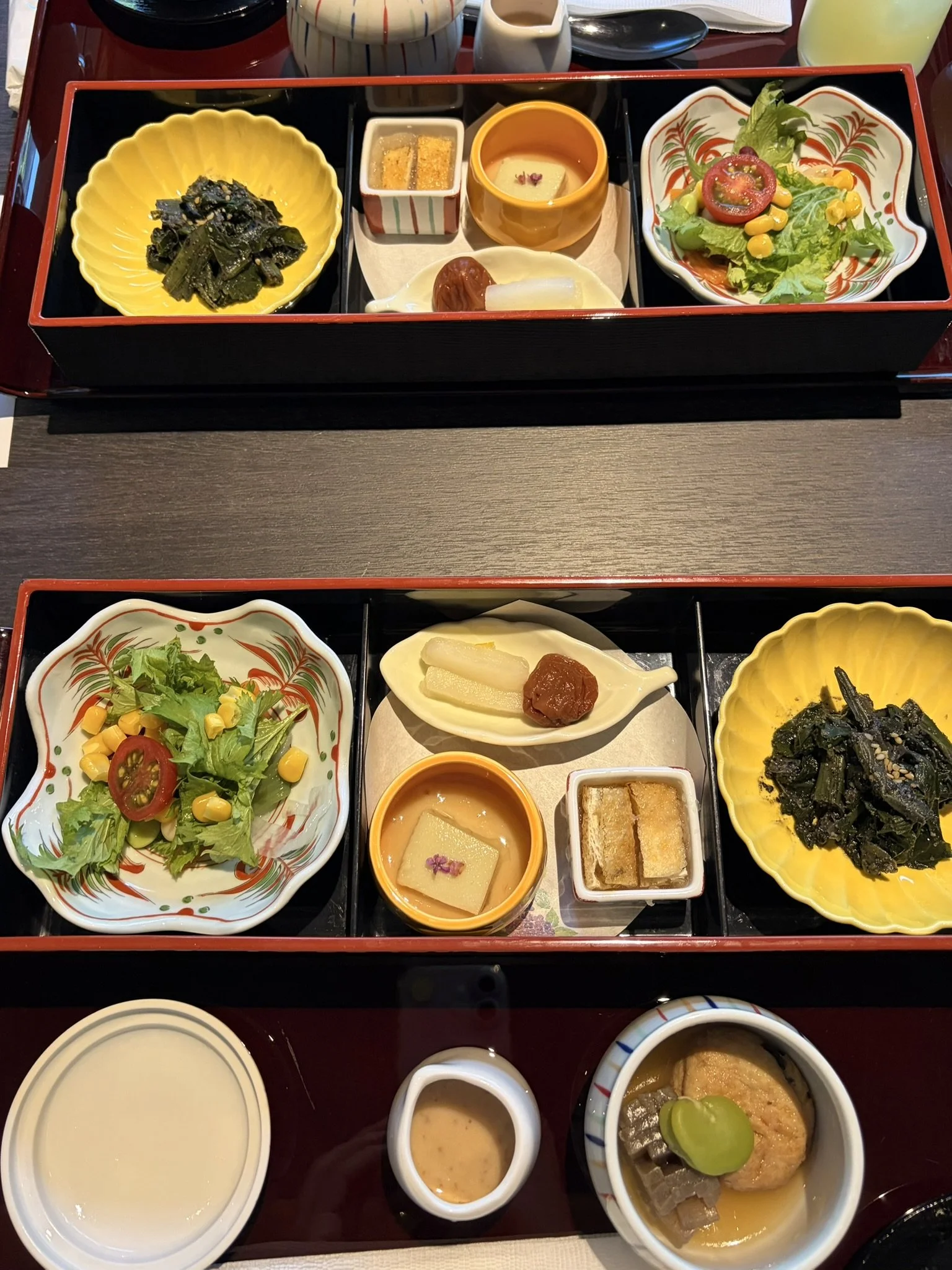
Breakfast at Hakujukan, Eiheiji
The Zen experience
The main reason I wanted to visit Eiheiji was to experience a zazen retreat, but without going for the very strict version where you sleep with the monks, clean, cook, and fully follow monastic life.
Hakujukan was the perfect balance. It gives you comfort, privacy, and a beautiful room, while still placing you completely next to the temple and its rhythm. Most people staying there are there for the same reason: to experience Eiheiji, learn about Zen practice, and take part in the temple activities.
Zazen meditation initiation
The first activity was a zazen meditation initiation with a monk in a temple annex. He explained the instructions in English, which made the experience accessible even if you are new to Zen meditation.
It lasted about one hour and was a very good introduction to zazen. I had already learned it before at a temple in Kamakura, so for me it was also a chance to reconnect with the practice in a completely different setting. Sitting quietly in Eiheiji, knowing the monastery is still alive with monks training there every day, gives zazen a different weight.
It is not a “wellness activity” in the trendy sense. It is simple, direct, and humbling. You sit. You breathe. Your knees complain. Your mind performs a full circus. You sit anyway.
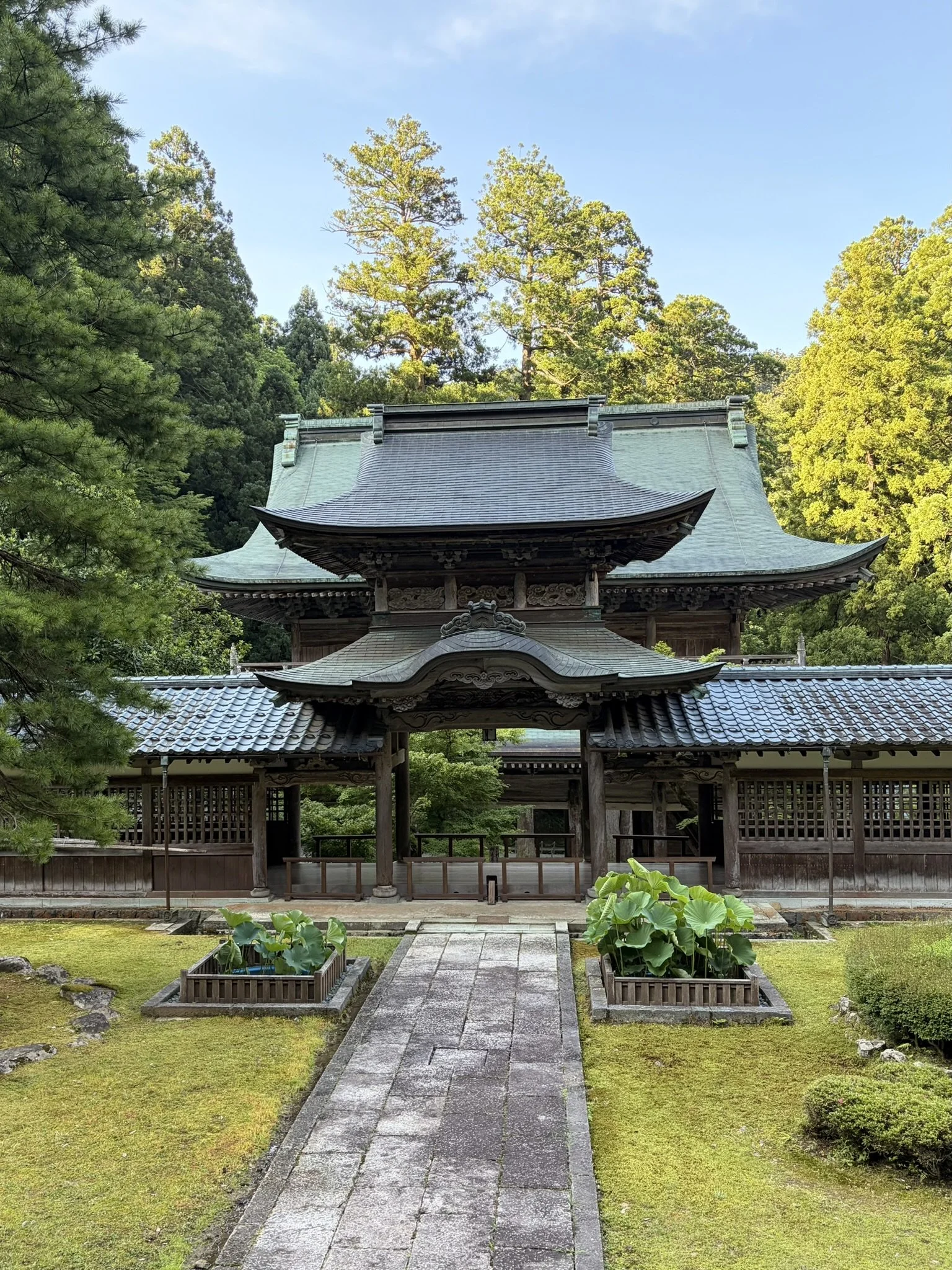
Eiheiji temple
Sutra transcription
Another activity was sutra transcription, which you can do at Hakujukan in a beautiful sun-bathed tatami room.
This was one of my favorite moments. It is relaxing, meditative, and surprisingly absorbing. You copy the characters slowly and carefully, and after a while, it becomes less about writing and more about the movement itself. It is quiet, spiritual, and very grounding. (This is also something you can do in Kamakura, in case you want to experience this closer to Tokyo - check out my Kamakura guide)
Even if you do not know Japanese characters, you can still enjoy the practice. Maybe even more, because you stop trying to “understand” and just follow the lines.
Morning chanting and private temple visit
The next day, we woke up around 5 a.m. to experience the morning chanting and then had an exclusive visit of the temple before it opened to the public.
This was the most special part of the stay.
Being inside Eiheiji so early, before the visitors arrived, made the whole place feel almost unreal. The temple is large, quiet, wooden, and surrounded by forest. Then you hear the chanting, the movement of the monks, the rituals beginning before the rest of the world has even had coffee.
Eiheiji is a major training monastery, with many monks coming from across Japan to train there. During the visit, you learn more about their daily life: the discipline, the routine, the practice, the way every action becomes part of training.
It felt like being a spectator of something very ancient and very alive at the same time.
The village around Eiheiji
The village itself is very cute, with cafés, souvenir shops, and a peaceful little atmosphere. It is small, but it is worth leaving time to wander around instead of rushing straight back to Fukui.
My favorite recommendation is Gallery Neiha, a pottery shop. It is exactly the kind of place where you walk in “just to look” and suddenly start emotionally justifying why you need a handmade bowl in your suitcase.
Also, walk a few minutes past the temple along the river until you reach a small park. There is a big open-air bell you can hit, and it is surprisingly fun. Very spiritual? Maybe. Very satisfying? Absolutely.
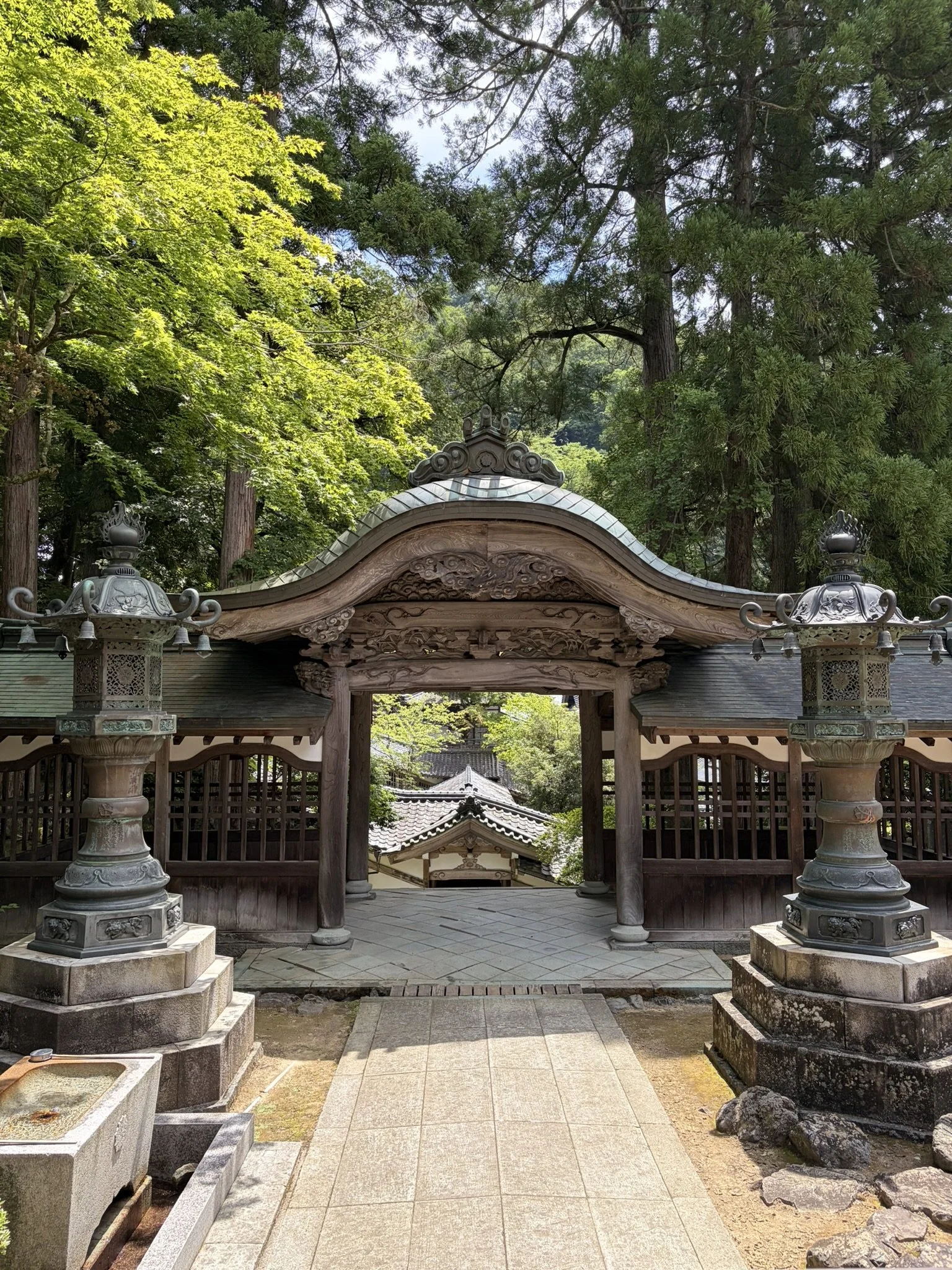
Eiheiji temple
My tips for visiting Eiheiji
Arrive early. I recommend getting there around 2 p.m. so you can check in calmly, settle into Hakujukan, and make sure you are on time for the 4 p.m. zazen meditation and the sutra transcription afterwards.
Also, keep your schedule flexible around the bus from Fukui Station, and give yourself a bit of extra time. The journey is not difficult, but because you are connecting trains, Shinkansen, and a local bus, it is much nicer when you are not rushing.
Eiheiji is perfect if you want a temple experience that feels meaningful but not too harsh. You are close to real monastic life, but you still get a beautiful room, an onsen, patient staff, and a soft bed at the end of the day.
For me, it was one of the most peaceful stops in Japan: quiet, elegant, spiritual, and just uncomfortable enough during zazen to remind me that enlightenment is probably not happening this week.
Visit Omio to book your train tickets to Fukui (direct access to Eiheiji).
